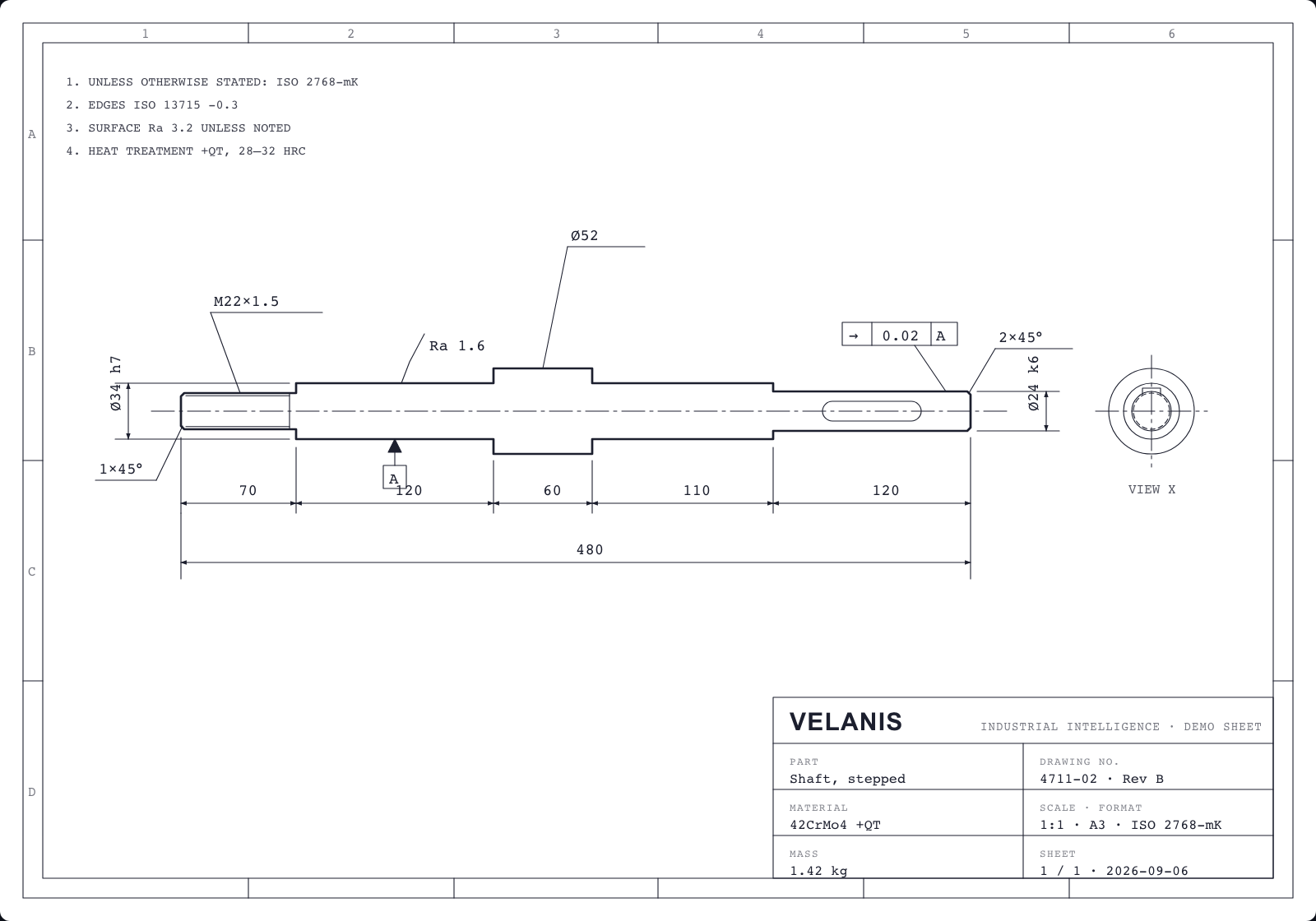
Velanis reads a technical drawing the way an experienced buyer does, turns it into a
structured digital twin, and matches that twin against what your suppliers have proven
they can make. Three ranked recommendations per part, with the reasoning attached.
excluded 41 · no hardened-steel history 17 · envelope below Ø52 9 · lifecycle blocked 3 · rest by fit
technologyTurning · milling (keyway)
material42CrMo4 +QT
Ø max52
length480
fitØ34 h7
fitØ24 k6
surfaceRa 1.6
threadM22×1.5
drawing · 4711-02 · shaft, steppedA3 · 1:1
01 · Modules
One twin, four ways to use it.
scroll or swipe to explore
01
Supplier matching
Three suppliers per new part, chosen from the ones that have proven the technology, the material and the size in your own history. Exclusions are listed as clearly as recommendations, so the buyer sees at once why a familiar name is missing.
A should-cost corridor per batch size, computed from machining time, material mass and the region of manufacture. It sets the range before the first quote arrives, and it shows which of the three levers moves the price.
Parts that resemble each other across plants and numbering systems, clustered by geometry and process route. Variant families surface that no part number was ever designed to reveal, and each family becomes one sourcing conversation.
CO₂ per part from cradle to gate, with the CBAM relevant share separated out. Material mass and process route come from the twin, so the footprint follows every sourcing decision the moment it is made.
Let’s talk about your procurement. Productivity. Now.
We show how drawings, ERP history and your supplier base become a defensible decision. Bring your questions and see how your procurement can become more productive.
Request a demo →No obligation · personal · built around your use case