Reference FG-031
Same material family and manufacturing technology as FG-042.
 VELANISIndustrial Intelligence
Technically similar reference parts with comparable characteristics, differences and historical price anchors where order data is available.
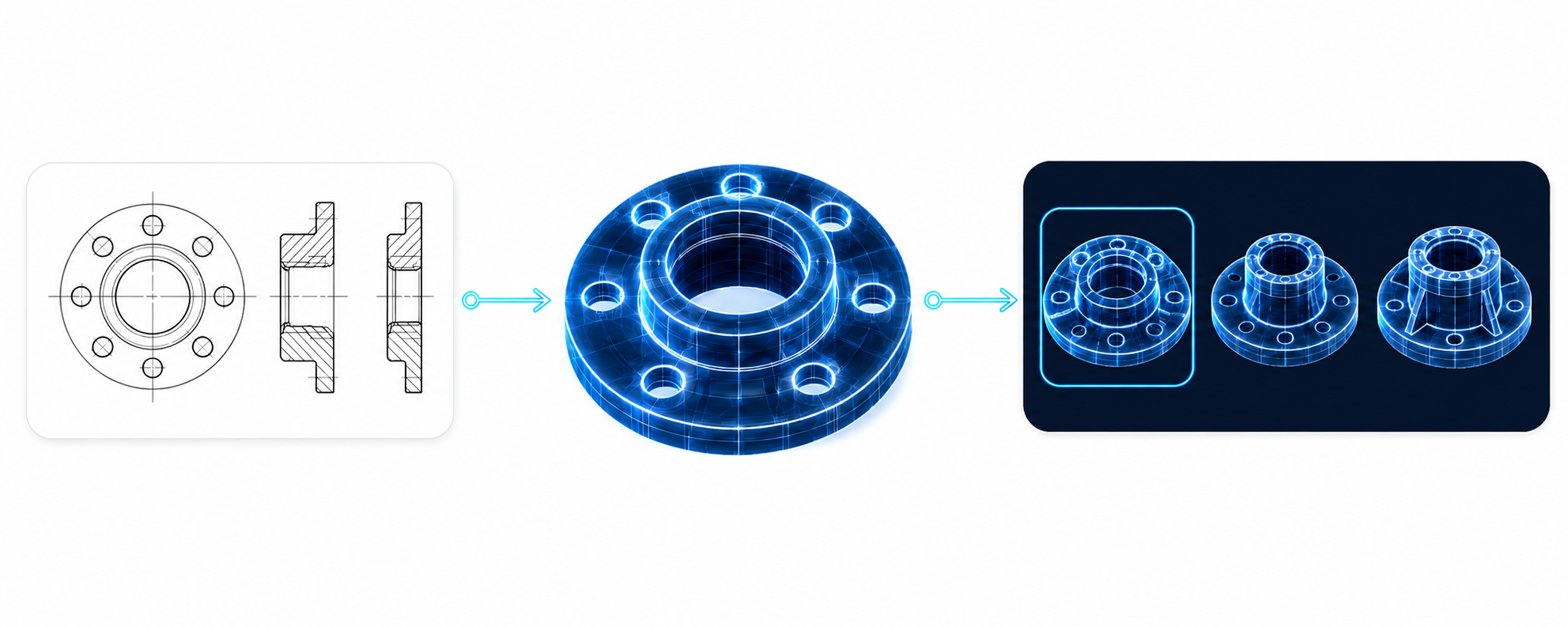
Illustrative example: FG-042 compared with reference FG-031. Historical prices are considered alongside quantity, date and terms.
Same material family and manufacturing technology as FG-042.
Different dimensions and surface requirement. Technical review needed.
Assess alongside order date, batch size and commercial terms.
A reviewed part profile and a portfolio of structured reference parts. Price anchors require linked historical orders with quantity, price and date.
Similarity does not confirm interchangeability. Tolerances, surface and function need expert comparison. A historical price is kept distinct from should-cost.
Open the reference part and review the differences. Use its purchasing history as context for costs and supplier selection.
Function, tolerances and surface determine whether a reference part suits the intended use. Historical orders provide price context; should-cost has its own calculation basis.
We show how drawings, ERP history and your supplier base become a defensible decision. Bring your questions and see how your procurement can become more productive.